
The Sustainable Shift: Why Strategic Boundaries Are My Path Off the Overtime Treadmill

The Necessary Shift: My Protocol for Turning Financial Fear into Financial Control
Let us be honest. When the phone rings, or the shift coordinator sends that desperate text, the majority of NHS nurses do not say ‘Yes’ out of ambition—we say ‘Yes’ out of necessity. We take extra shifts because our core pay, constrained by the low incremental increases of Agenda for Change (AfC), simply cannot cover the true cost of living, childcare, and basic financial security.
This is the grim reality, and any advice that ignores this fact is useless.
I know the feeling perfectly. As an NHS Nurse Mother with years of experience in critical care, I have been there, trading precious family time for the urgent need to bridge a financial gap.
My mission is not to tell you to simply stop working extra shifts—because I know that isn’t possible overnight. My mission is to equip you with the strategic framework I use to ensure that the overtime you must work is temporary, targeted, and serves a long-term goal. Your decision to protect your long-term boundaries is the single greatest investment you can make in your professional future and family stability.
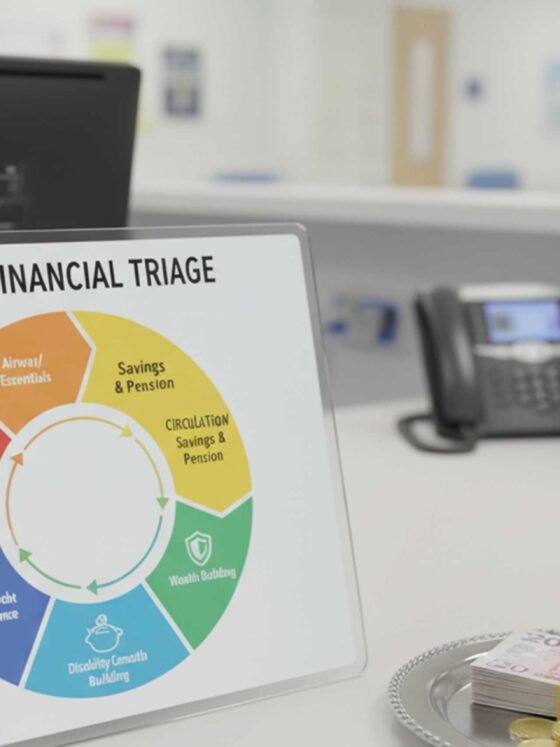
My Financial Triage of Overtime: Making Every Extra Hour Count
NHS leaders often look at overtime as a simple transaction: hours worked equals hours paid. I want to educate you—and empower ourselves—to see the total, true cost of those extra hours, ensuring that if you do say ‘Yes’, it’s worth the price.
Before I accept an unscheduled shift, I always perform this critical triage, evaluating whether the net financial gain genuinely justifies the severe cost to my physical, emotional, and financial security.
| Variable | My Critical Care Nurse’s Triage Assessment | The Hidden Financial Cost |
| Financial Gain | Does the unsocial hours rate truly offset the extra cost once tax is applied? | Tax and Benefits Trap: I’ve seen high overtime income temporarily push nurses into a higher tax bracket, or affect means-tested benefits. This means the net gain is far smaller than the exhausting personal cost, and the money isn’t working as hard for you. |
| Childcare Cost | How much extra childcare will I require for this shift, and is it emergency rate? | The ‘Zero-Sum Game’: For me, the cost of emergency or extended childcare (often private and expensive) can cancel out the majority of the overtime pay, leaving me with physical exhaustion and guilt for minimal reward. |
| Fatigue Risk | Will this shift compromise my essential rest and my ability to deliver safe care during my next rostered shift? | Productivity Loss: I know that fatigue reduces my cognitive function. I must protect against the risk of sick days or clinical errors—the real long-term cost to the NHS and to my career security. |
| Family Time | Does this shift steal time from a non-negotiable family ritual or recovery day? | The Mental Health Debt: I am incurring an emotional debt (guilt, stress) that I will have to pay back later through increased anxiety, directly undermining the goals of my Decontamination Protocol post. |
My Sustainable Shift Protocol: Strategic Work for a Boundary-Based Future
My ultimate goal is to only work my rostered hours. Until I reach that financial position, I use these steps to ensure I am in control of my decision, not my debt.
1. The Financial First Step: Build the Buffer
The single most powerful act you can take to stop the overtime cycle is to create a Contingency Fund.
- My Action: I used the framework from my Budget Triage post to set a target for a three-month financial buffer. I view every necessary overtime shift as a targeted attack on that savings goal. Once that goal is met, I immediately begin saying ‘No’ to non-essential shifts. I am working to stop working.
2. The Proactive Statement of Availability
I never wait to be asked. I proactively communicate my boundaries to my line manager at the start of the rota period.
- My Action: “To maintain high safety standards and ensure my personal recovery for my core rostered shifts, I am currently restricting my capacity for additional work this month.” This puts the onus on the system, not on you.
3. My Professional Script for Declining
When the call comes, I use a respectful but firm script that prioritises my clinical safety. This ensures it always sounds like a considered, evidence-based decision, not simply a personal refusal.
- My Example: “Thank you so much for thinking of me. Due to my current workload and recovery needs, I need to prioritise my scheduled shifts this week to ensure I am providing safe care. I must respectfully decline this request.”
- (Remember: I am citing safety and professional integrity, not simply being tired.)
4. The Recovery Priority
I frame my rest time as part of the essential clinical process, much like mandatory equipment maintenance.
- My Action: I plan my post-shift recovery days into my diary first. If a request infringes on this, I state that I am unavailable due to a “pre-existing commitment” (my non-negotiable recovery period).
5. The Investment in Future Income: Time Recovery
The true return on investment for saying ‘No’ is the recovery of your most valuable asset: non-clinical mental space.
- My Action: I dedicate a portion of the time I recover from saying ‘No’ to family and self-care, and a small, non-negotiable portion to engaging in personal hobbies that could become future money-earning tools—whether that’s writing, designing digital products, or upskilling. I am using my recovered time to build my exit strategy.
Conclusion: Working Your Way Out of Overtime
To you, the NHS nurse mother: I know you are taking those shifts because you have to. My goal is to use my finance knowledge to help you work your way out of that necessity. The ultimate goal of setting this boundary is to buy back the time needed to pivot from shift worker to business owner.
By adopting this protocol, I am taking control of my financial health, securing my family’s future, and creating the mental capacity to build the life where I can hang up the shift work cap and spend more time with my little one.
My Next Steps to Secure My Future:
- Protect My Peace: I implement the Decontamination Protocol: 7 Non-Negotiable Steps to Shedding the Critical Care Shift Before You Hug My Kids.
- Protect My Money: I apply the framework in The Critical Care Nurse’s Budget: Triage Strategies for Irregular Shift Pay & AfC Stagnation.